

Screening in pregnancy are planned and professionally managed health checks that monitor the health of the pregnant woman and the development of the foetus throughout pregnancy. Their aim is to detect potential risks early, ensure a safe pregnancy and support the mother-to-be.
The most common pregnancy check-ups include:
- First review
It usually takes place between 6 and 10 weeks. The gynaecologist confirms the pregnancy, performs an ultrasound, basic blood and urine tests and sets the expected date of delivery. - Regular gynaecological check-ups
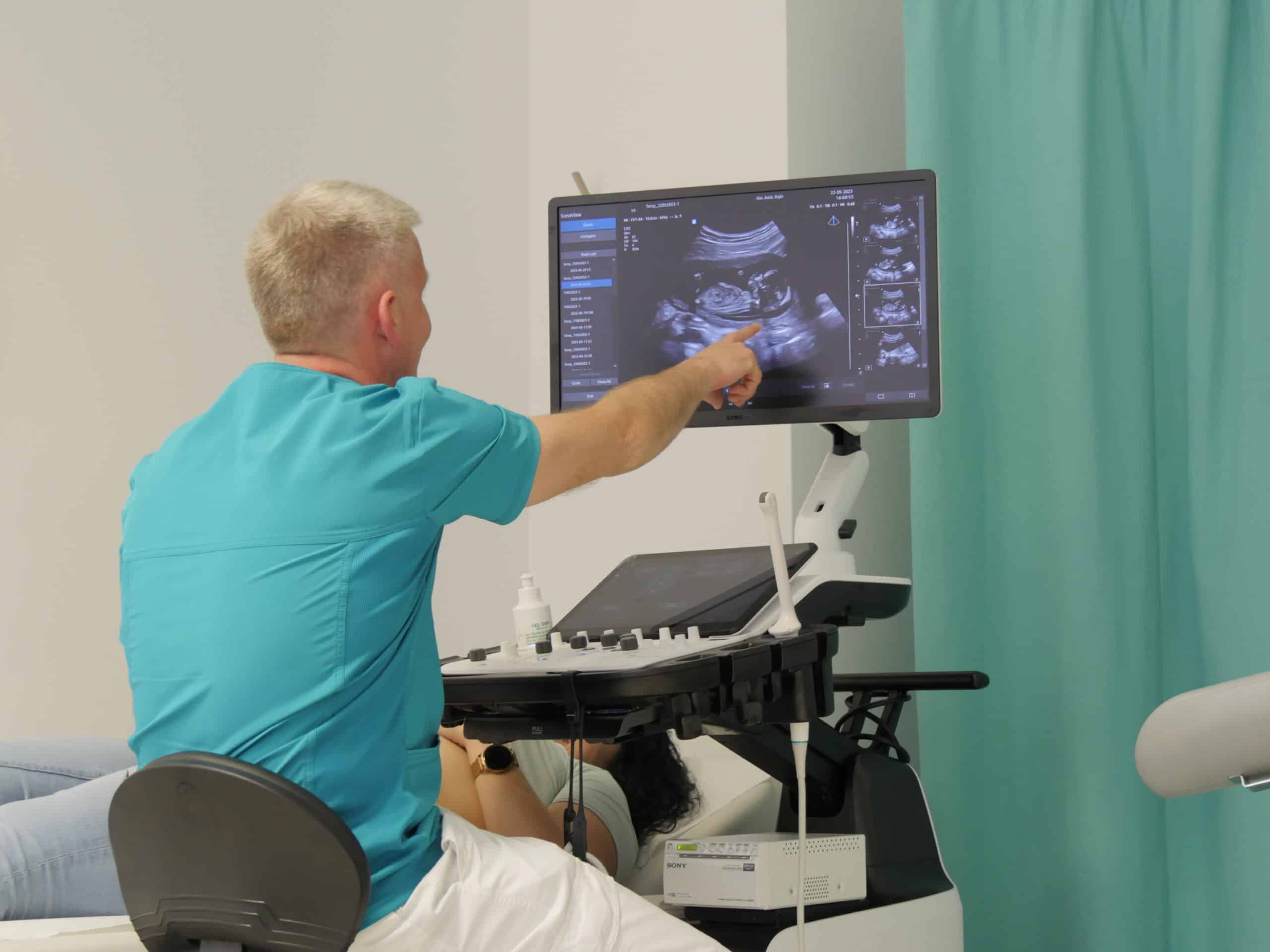
Pregnant woman at 4 weeks see a gynaecologist to monitor blood pressure, weight, cervical condition, fetal growth and position, fetal heart rate and any pregnancy problems. - Ultrasound examinations : Early ultrasound (around 7-10 weeks) to confirm pregnancy, nuchal brightness (11-14 weeks) to assess the risk of chromosomal abnormalities, fetal morphology (20-22 weeks) for detailed assessment of organ development and subsequent ultrasounds as necessary, in particular for growth monitoring.
- Laboratory tests
These include blood and urine tests, haemoglobin measurements, blood typing, pregnancy diabetes test, infection screening and other tests depending on the health condition of the pregnant woman. - Glucose loading test
Usually between 24 and 28 weeks for the diagnosis of gestational diabetes. - CTG (cardiotocography)
Later in pregnancy, it is used to monitor the fetal heart rate and the afterbirth, especially in the last weeks or when complications are suspected. - Special checks if necessary
For higher-risk pregnancies (e.g. chronic illness, high blood pressure, multiple pregnancies), additional examinations such as more frequent ultrasounds, umbilical cord flow measurements, etc. are carried out.
Screening in pregnancy crucial for a safe and healthy pregnancy and enable parents-to-be to get reliable information, support and a sense of confidence throughout the process.