


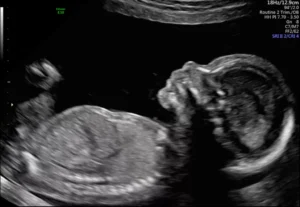
Fetal ultrasound morphology - from 20. to 24th week of pregnancy
Fetal morphology ultrasound is one of the the most important ultrasound examinations in pregnancy. It is usually carried out between 20 and 24 weeks of pregnancy and represents a detailed overview of the child's anatomy and the development of the organs. The purpose of the examination is to check whether the foetus is growing and progressing according to its gestational age and to identify whether there are any structural or developmental complications.
During the morphological examination, the gynaecologist makes a detailed assessment of the head and brain (the shape of the head, brain structures, brain chambers, cerebellum and other important anatomical features are examined), face (the eyes, nasal bone, lips are examined (possible cleft
lips or sky)), back and spine (the whole spine is checked to rule out an open neural tube defect (spina bifida)), heart (a detailed examination of the four cavities of the heart, the draining vessels, the heart rhythm and any heart defects), the abdomen and internal organs (stomach, kidneys, bladder, abdominal wall, intestines and umbilical cord (number of blood vessels) are looked at), extremities (examination of arms and legs, measurement of bones (humerus, femur), symmetry and movement), condition of postelina and amniotic fluid quantity (assessing the position and thickness of the placenta and the sufficiency of the amniotic fluid); and fetal growth (body measurements (e.g. head circumference, abdominal circumference, bone lengths) are taken to assess whether the foetus is growing in line with gestational age). on review four heart cavities and the draining vessels, as this rules out the most common congenital heart defects. If necessary, it is also used Doppler ultrasoundwhich allows you to check the flow in the umbilical cord and other vessels.
It is non-invasive, slightly longer ultrasound examination (It is performed through the abdomen, sometimes vaginally if necessary to better show certain structures.
Fetal ultrasound morphology is therefore a crucial part of antenatal care, providing an accurate view of the baby's health and development.